
Skin & Hair Changes in the Perimenopause to Menopause Transition
Skin and hair changes are incredibly common during the perimenopause to menopause transition, yet many women are surprised by how noticeable they can feel. These shifts aren’t superficial, they’re rooted in the deep physiology of hormonal change.
Oestrogen plays a key role in maintaining skin elasticity, hydration, and collagen production. As levels fluctuate and eventually decline, the skin can become drier, thinner, and less able to retain moisture. Fine lines may appear more quickly, and the skin may feel more sensitive or reactive than before. Some women notice changes in pigmentation or a duller complexion, while others experience breakouts that feel reminiscent of adolescence.
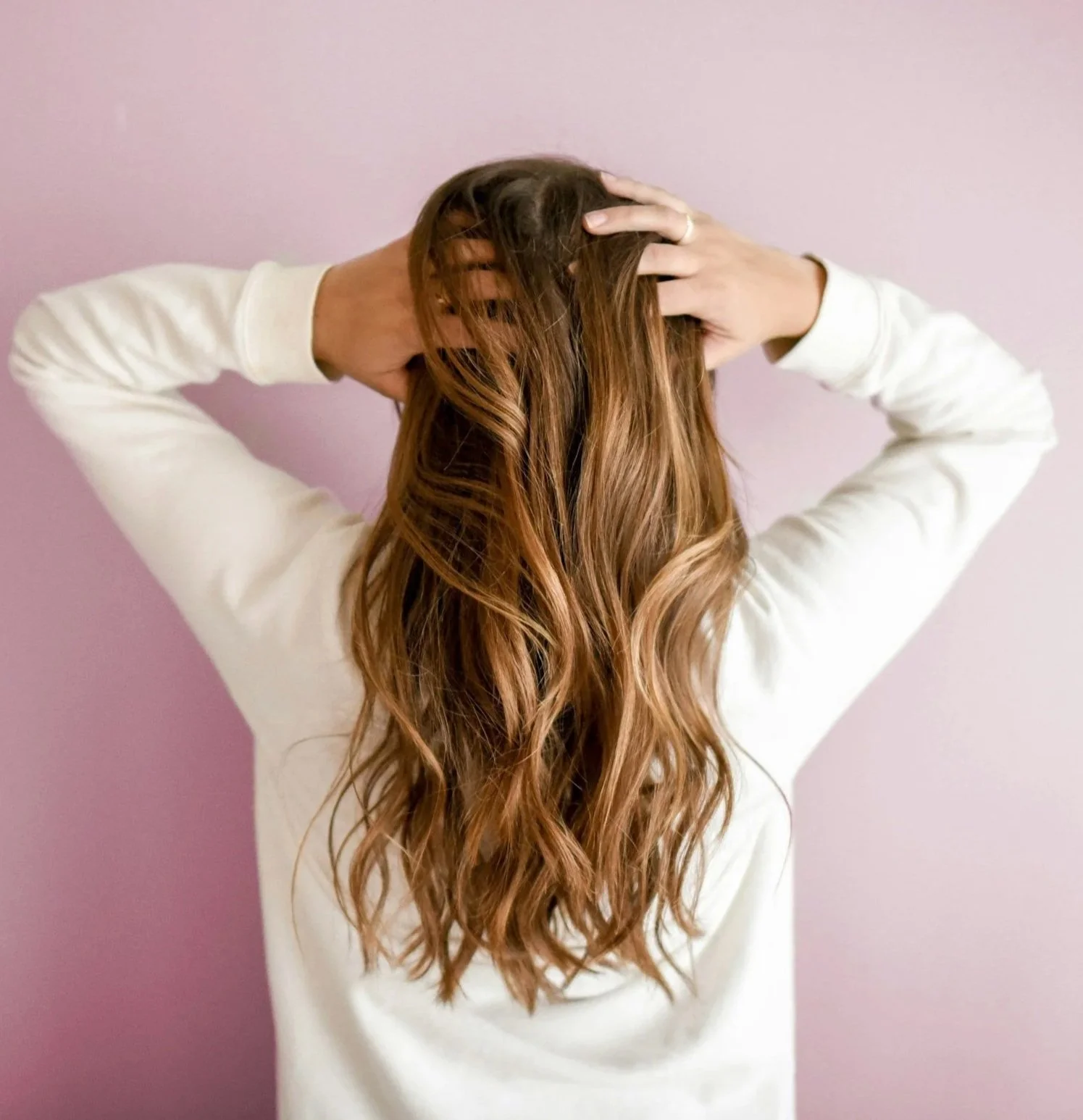
Hair can also respond to hormonal shifts. Oestrogen helps keep hair in its growth phase for longer, so when levels drop, hair may shed more easily or feel less full. Some women notice thinning around the crown or temples, while others describe their hair as more brittle, frizzy, or lacking its usual shine. At the same time, androgens can become more dominant, which may lead to increased facial hair or changes in texture.
These changes can feel unsettling, especially when they happen alongside other symptoms, but they are a normal part of the body adapting to a new hormonal environment. Understanding the physiology behind them can help you feel more in control and less frustrated by what you see in the mirror.
There are several ways to support skin and hair health during this stage. Nourishing your body with protein, healthy fats, and hydration can make a meaningful difference. Gentle skincare that supports the skin barrier, alongside ingredients that encourage collagen production, can help restore comfort and radiance. For hair, focusing on scalp health, reducing heat and chemical stress, and supporting overall nutrition can help maintain strength and shine.
The goal isn’t to chase youth, it’s to support your skin and hair so they feel healthy, resilient, and aligned with the stage of life you’re in.
If you’d like to understand these changes more clearly and explore practical, evidence‑based ways to support your skin and hair during this transition, you can check out our services, or why not join our upcoming taster session.
If you’d like to understand these changes more clearly and explore practical, evidence‑based ways to support your skin and hair during this transition — We’re here to help!
If you’re noticing changes in your skin or hair and want to understand why and what you can realistically do to support them, you’re in the right place. These shifts are common, but they can still feel unsettling. You deserve clear explanations, practical strategies, and support that actually works. Reach out or join one of our Group Programmes to learn what’s happening beneath the surface and discover evidence‑based approaches that help you feel more confident and cared for.